Building Developer Tools Without a CS Degree: A Non-Technical Founder's Playbook
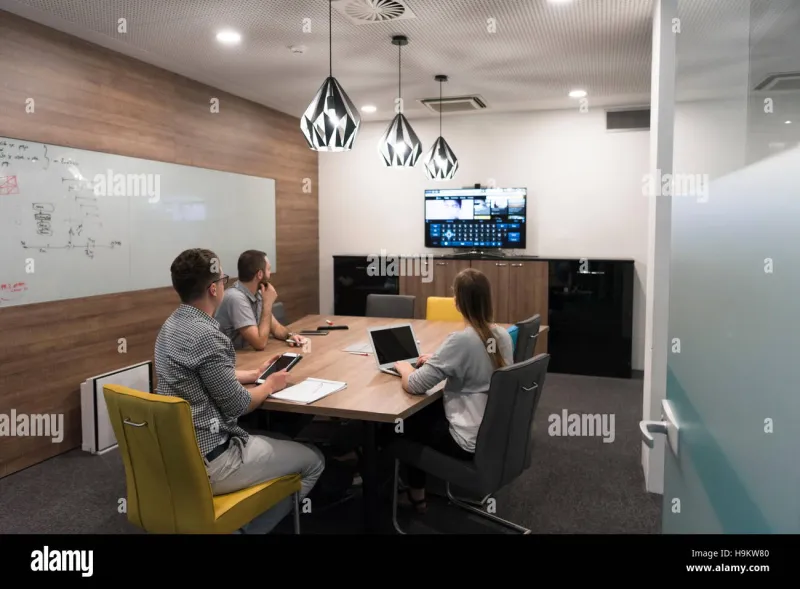
Photo: non-technical founder meeting with software engineers around laptop in startup office, via c8.alamy.com
The Credibility Problem Is Real — But It Is Not Insurmountable
Developer tools is one of the few product categories where the customer can immediately identify whether the person selling to them has ever experienced the problem firsthand. Engineers are, by professional disposition, skeptical of abstraction and sensitive to inauthenticity. A non-technical founder pitching a CI/CD optimization tool at a developer conference faces a fundamentally different credibility challenge than a founder selling CRM software to a sales team.
This does not mean non-technical founders cannot build successful developer-focused products. Several of the most widely adopted platforms in the US developer ecosystem were shaped in significant part by founders who came from business, design, or operations backgrounds. But those founders succeeded by understanding the nature of the credibility gap and addressing it deliberately — not by pretending it did not exist.
What Engineers Actually Distrust
Before a non-technical founder can close the credibility gap, it is worth understanding precisely what engineers are skeptical about. It is rarely a blanket dismissal of non-engineers. It is something more specific.
Engineers distrust founders who describe technical problems in imprecise language. They distrust roadmaps that prioritize marketing-friendly features over genuine workflow improvements. They distrust product decisions that appear to have been made without anyone in the room who has actually used the tool under real conditions. And they are acutely sensitive to the difference between founders who are learning alongside them and founders who are performing familiarity.
The non-technical founder who acknowledges their perspective honestly — I have not written production code, but I have spent three months embedded with engineering teams watching how they work — earns more credibility than one who overstates their technical background. Engineers respect intellectual honesty. They encounter it less often than they would like.
The First Hire Is the Most Consequential Decision
For non-technical founders entering the developer tools space, the first technical hire is not simply an engineering decision. It is a credibility and culture decision that will shape everything that follows.
The ideal first technical hire in this context is not necessarily the most experienced engineer available. It is an engineer who combines genuine technical depth with the disposition to be a co-author of the product vision — someone who will push back on feature decisions, represent the engineering user's perspective in every roadmap conversation, and serve as an internal validity check on the founder's assumptions.
Some founders in this position have found that a strong technical advisor, engaged meaningfully rather than nominally, can serve a similar function during the pre-product phase. The key word is meaningfully. An advisor who reviews a deck once a quarter provides little value. An advisor who joins customer discovery calls, reviews API documentation drafts, and participates in architecture discussions provides significant leverage.
Community Trust Is Built Differently in Developer Markets
In most B2B categories, trust is built through case studies, analyst coverage, and reference customers. In the developer tools market, trust is built through demonstrated technical substance — and the community can tell the difference.
The most effective non-technical founders in this space have invested heavily in content and community engagement that reflects genuine understanding of the problems their tools solve. This means publishing post-mortems that acknowledge product limitations honestly. It means contributing to conversations in developer communities — on platforms like GitHub, Hacker News, and relevant Slack workspaces — without leading with promotional intent. It means making the product's technical documentation a genuine priority, not an afterthought.
Several successful founders in this category have described their approach as earning the right to market by establishing substantive technical credibility first. That credibility is not faked. It is developed through sustained engagement with the community the product serves.
Feature Prioritization Without Technical Instinct
One of the most persistent operational challenges for non-technical founders in developer tools is feature prioritization. Without the intuition that comes from engineering experience, it is easy to over-index on features that look compelling in a demo but add friction to actual workflows — or to under-invest in capabilities that engineers consider table stakes.
The most reliable mitigation strategy is a structured approach to developer feedback that goes beyond standard user interviews. Engineers often communicate product needs indirectly — through bug reports, GitHub issues, documentation questions, and forum posts — rather than through formal research sessions. Building systems to capture and synthesize that signal is essential.
Some founders have formalized this through dedicated developer advisory councils: small groups of working engineers who receive early access to features in exchange for structured feedback. The key is ensuring these groups represent the actual target user — not the most technically sophisticated engineers available, but the engineers who resemble the product's intended customer profile.
Go-to-Market in a Trust-First Category
The developer tools go-to-market motion is distinct from most enterprise software categories. Developers rarely respond to traditional outbound sales, and they are deeply resistant to marketing language that overpromises. The most effective distribution strategies in this space share a common characteristic: they lead with genuine value before asking for anything in return.
Free tiers, open-source components, and generous documentation are not just product decisions — they are distribution strategies. They allow engineers to evaluate a tool on their own terms, build familiarity without commitment, and develop the kind of firsthand conviction that drives both adoption and word-of-mouth.
For non-technical founders, the go-to-market advantage is often in areas where engineering founders are less comfortable: storytelling, partnership development, enterprise relationship management, and cross-functional team building. Leaning into those strengths while building genuine technical credibility through team and advisors is the most durable path forward.
The Long Game
Building developer tools without a technical background is not a shortcut to an easier market. In many respects, it is a harder path. The credibility requirements are higher, the feedback loops are more demanding, and the community's tolerance for inauthenticity is low.
But the non-technical founder who approaches this challenge with genuine curiosity, intellectual honesty, and a commitment to surrounding themselves with deep technical expertise can build something that compounds. The developer tools market in the United States is large, competitive, and underserved in specific niches. The founders who succeed there are not always the ones who can write the code — they are the ones who most clearly understand what engineers actually need and build organizations capable of delivering it.